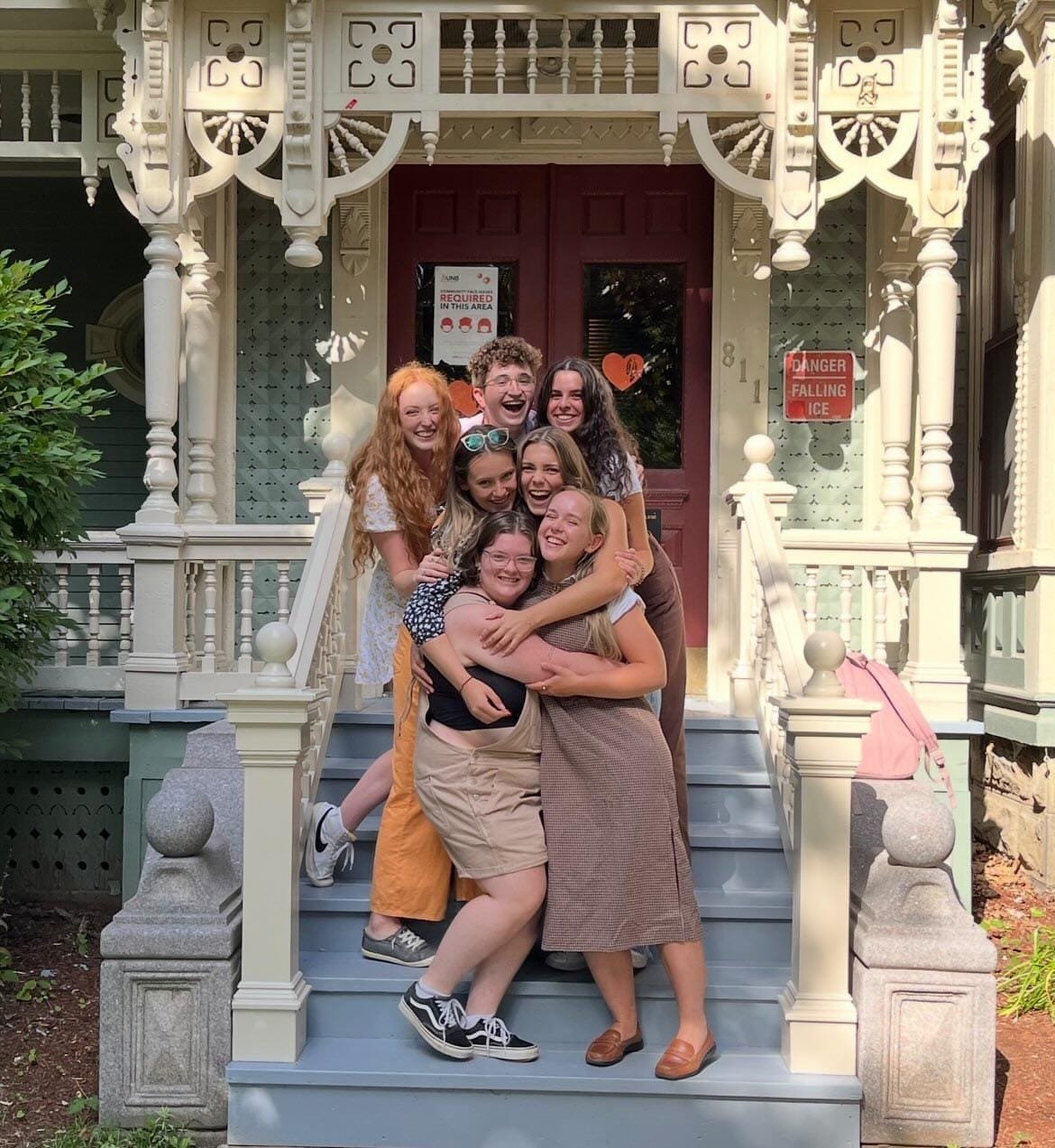
The Power of a Support System
When you begin university, you are standing on the precipice of new friends, new knowledge, self-discovery, and possibly a whole new city or even country to explore. The complex blend of emotions that accompanies this transition will likely follow you throughout the course of your degree as you navigate countless things for the first time. There will be many moments of excitement, joy, discovery, and freedom. But, there will also be times when you feel anxious, stressed, overwhelmed, frustrated, or lonely, possibly craving the familiarity of life back home. Regardless of your circumstances or how far you are into your degree, if there’s one piece of advice I’d give you, from alumni to current student: prioritize your support system. Cultivate those new, budding relationships, but also do your best to maintain the ones back home, too. Nurture and foster a network you can turn to in moments both positive and negative as you continue to carve a path for yourself, because there is no reason you should have to face either life’s successes or challenges on your own.
Speaking from my own experience, moving away from my small hometown in Newfoundland for the first time when coming to Fredericton was a huge transition for me. Despite not being a large distance apart geographically, I had left behind almost all of my loved ones in the process. For 18 years, I had been shaped by the community I’d built for myself there. I felt like I had to rediscover who I really was upon moving, and that would not have been possible without the community that I gradually cultivated over the course of my four years at UNB.
About halfway through my degree, I experienced something that proved to me how important having a solid support system truly is. My whole life, at the very core of that support system had always been my dad. Without fail, he was the first to congratulate me on any achievement, big or small, and encouraged me to pursue my passions. One of my favourite memories of him was on a hot summer’s day when 11-year-old Evan said exasperatedly,
“I need a fan!”
To which he responded, “I am your fan!”
I laughed and said, “I know you are, but I meant an actual fan.”
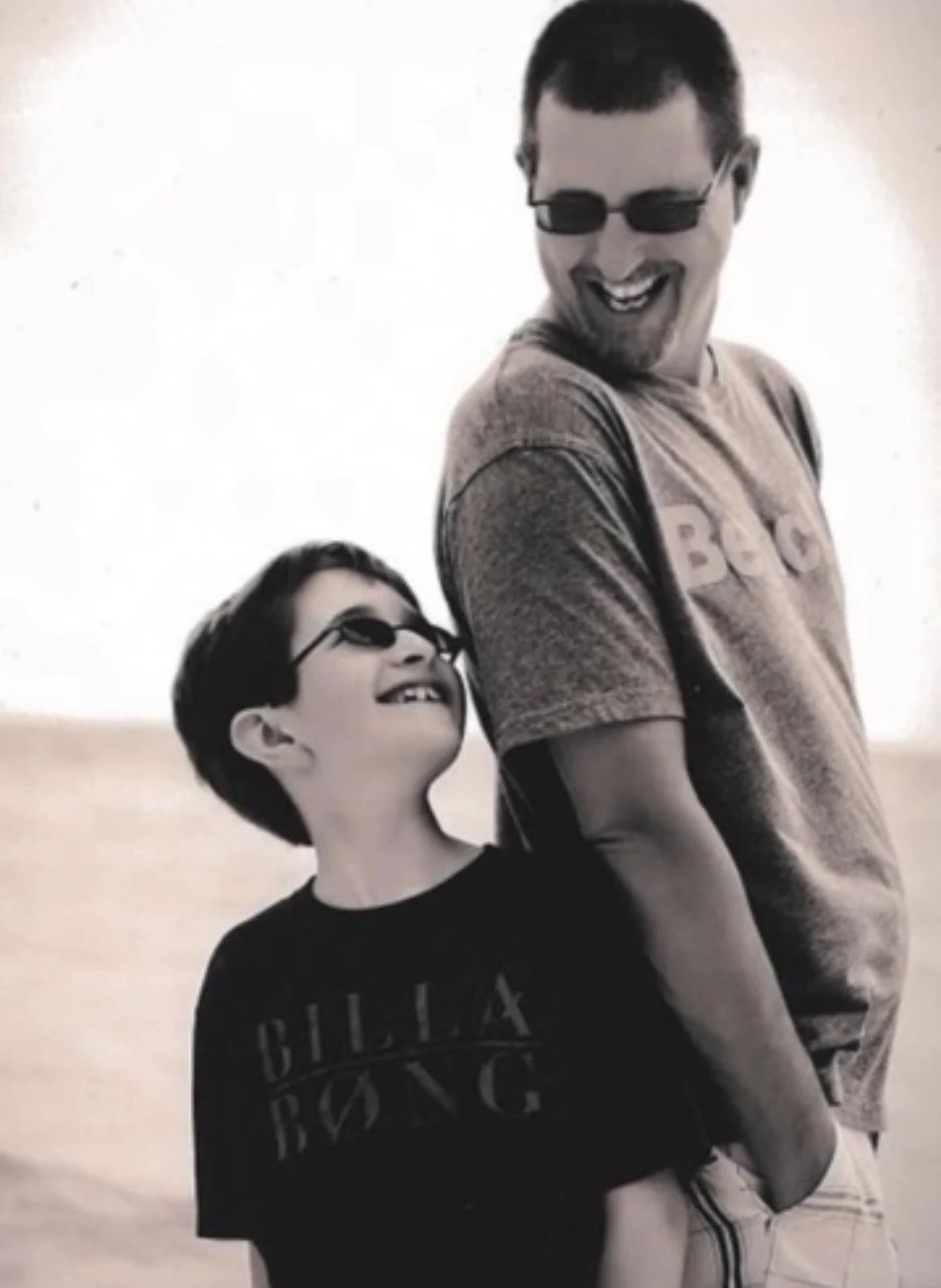
I have memories of calling him from my dorm room in Fredericton, where he’d reassure me that my essay was perfect (it most certainly wasn’t), I should take some more time to rest (he was right), and that he missed me (I missed him, too). If I had a moment of silence, I wanted to fill it with his familiar, comforting voice, even if it couldn’t be in person.
Unexpectedly, he became very ill during my second year, and I abruptly had to leave school and return home near the end of the winter semester. He passed away soon afterwards. As you can imagine (or may possibly have experienced yourself), the pain of losing a loved one is indescribable. But, when I lost the most important person in my life and felt like my world had shattered, my support system rallied around me and helped me to pick up the pieces.
I want to remind you that there is no shame in asking for help when you need it. I have the tendency to be afraid to ask for help, afraid of being an inconvenience. But I promise you, the people who care about you want to be there to help you, whether it’s a situation similar to mine or otherwise. My professors gave me extensions and exemptions from final exams and projects. Friends gave me the space to feel every facet of my emotions, ready to either comfort me or make me laugh so hard that my sadness lifted just a little bit. My family shared in my grief and encouraged me to keep going for both myself and for my dad. Everyone in my life refused to let me deal with this loss alone, and now, three and a half years later, I still don’t know how to put my gratitude for that into words. I just hope that when you face a challenge that seems insurmountable, rather than struggling alone, you turn to your own support system to help guide you through. And, when those in your life are the ones going through hardship, I hope that you will do what you can to help, too.
There is no linear path through grief or any of life’s other challenges, nor is there a blueprint to know exactly how best to handle them or process the emotions that come along with them. There are any number of cliches that I could throw at you, like “don’t give up!” or “you aren’t alone!”, but hearing platitudes like that on their own can only do so much. Instead, if you are going through difficult times, my advice would be to please give yourself the necessary time and space to process and feel your emotions, turning to those you love when you need support that can’t be given to yourself. It can be easy to think that we have to deal with our problems alone, but I promise you that’s not the case. You are not weak or a failure if you need to take a step back, or if you ask for help. Feeling human emotions and needing to lean on loved ones for support in your time of need is not a nuisance or a burden. Do all that you can for your own wellbeing, but never underestimate the positive impact that your support system can have. I owe so much of where I am today - and the person that I am today - to my support system. I hope that you can be both unafraid of asking for help from your own support system, and willing to do what you can to offer your own support and care when needed.